Emergent by Emergent Labs
Builds production-ready apps from natural language prompts
Emergent is an AI-powered platform that builds full-stack, production-ready applications from natural language prompts, streamlining the entire development process. It uses advanced AI agents to handle planning, coding, testing, and deployment, targeting users who want functional apps without coding expertise. The platform supports a range of use cases, from creating new apps to modernizing legacy systems, and integrates with tools like GitHub and Claude Sonnet 4.
The core feature is its agentic vibe-coding system, where users input plain English descriptions, and AI agents translate them into complete applications. For example, a prompt like “build a customer feedback dashboard” triggers the agents to design the architecture, write code, and set up databases and APIs. The platform also offers live previews, automated testing, and cloud hosting, ensuring apps are functional and scalable. Its ability to automate code refactoring and library upgrades makes it valuable for teams managing technical debt.
Compared to competitors like Bubble and OutSystems, Emergent stands out for its autonomous, end-to-end development. Bubble focuses on visual drag-and-drop interfaces, while OutSystems targets enterprise-grade low-code solutions. Emergent’s pricing is credit-based, with actions like coding or deploying consuming credits, which can be more flexible but less predictable than Bubble’s subscription model.
Some users report server reliability issues, which can disrupt workflows. The credit system may also confuse new users, as costs vary by project complexity. Documentation is robust, with guides at help.emergent.sh, but the learning curve for optimizing prompts can be steep for beginners.
To get started, visit app.emergent.sh, create an account, and experiment with a simple prompt to understand the platform’s flow. Monitor credit usage closely and leverage GitHub integration for collaboration. The platform’s strength is its ability to deliver functional apps quickly, but patience with occasional glitches is key.
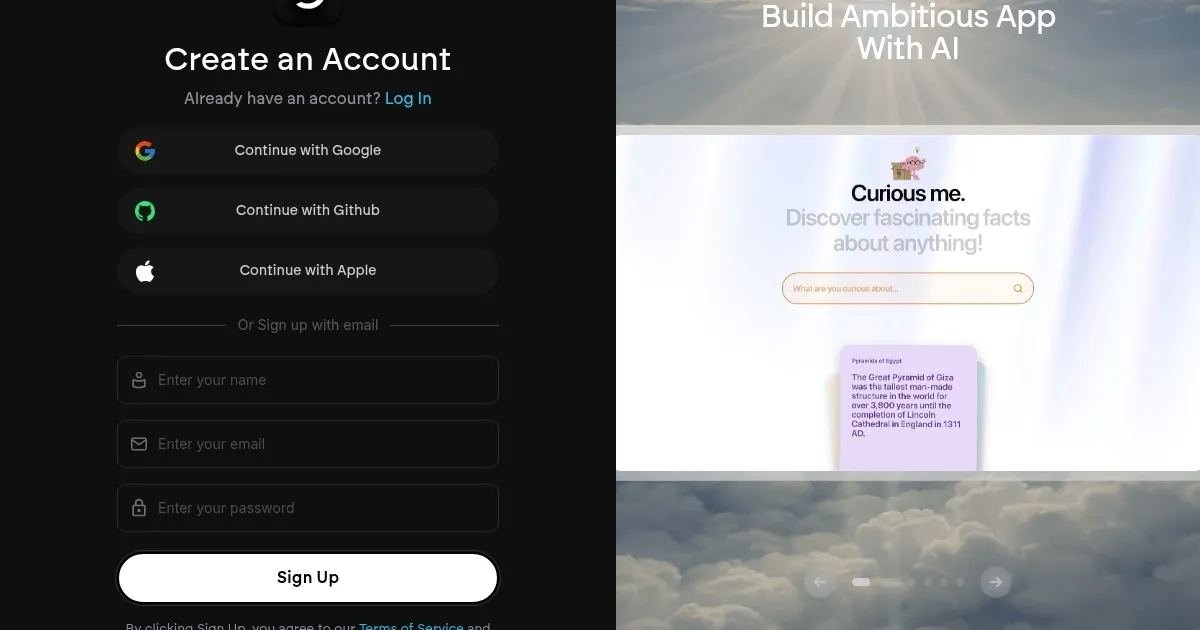
Homepage Screenshot 📸
Video Overview 🎬

What are the key features? ✨
- Agentic Vibe-Coding: Transforms natural language prompts into full-stack applications.
- Automated Testing: Generates tests to ensure app functionality and reliability.
- Cloud Hosting: Stores components and assets securely in the cloud.
- Code Export: Allows users to export HTML code for reuse elsewhere.
- Legacy Code Migration: Automates modernization of outdated codebases.
Who is it for? 🤔
Examples of what you can use it for 💡
- Startup Founder: Builds a customer feedback dashboard to validate a business idea quickly.
- Small Business Owner: Creates a custom e-commerce platform without hiring developers.
- Developer: Automates migration of legacy code to modern frameworks.
- Freelancer: Designs a client portfolio site using natural language prompts.
- Data Engineer: Constructs ETL pipelines for efficient data warehousing.
Pros & Cons ⚖️
- Builds apps from simple text prompts.
- Supports legacy code modernization.
- Integrates with GitHub, Claude.
- Server issues can disrupt workflow.
- Costs can add up for complex apps.
FAQs 💬