RODIN Diffusion by Microsoft
Generates detailed 3D avatars from portraits or text prompts using diffusion models
RODIN Diffusion is an advanced AI-driven generative model for sculpting highly detailed 3D digital avatars. Utilizing the mechanism of neural radiance fields, it leverages state-of-the-art diffusion techniques to enable the creation and manipulation of 3D avatars with uncanny realism and fidelity.
The tool generates 3D models that can be inspected from every angle, enhancing the efficiency of the 3D modeling process. This technology facilitates the generation of avatars directly from portraits, text prompts, or random noise — offering vast creativity flexibility for users, including the ability to edit aspects such as hairstyle, facial hair, accessories, outfit, and facial expressions in an intuitive, text-guided manner.
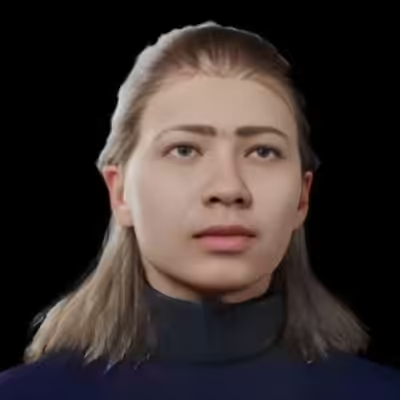
RODIN Diffusion can generate diverse avatars, including variations in gender, age, ethnicity, and facial expressions, among other attributes.
Developed by a team of researchers and engineers, the model’s creation is a notable achievement in the field of AI and 3D modeling, emphasizing its potential to innovate how digital avatars are created and used across various applications.
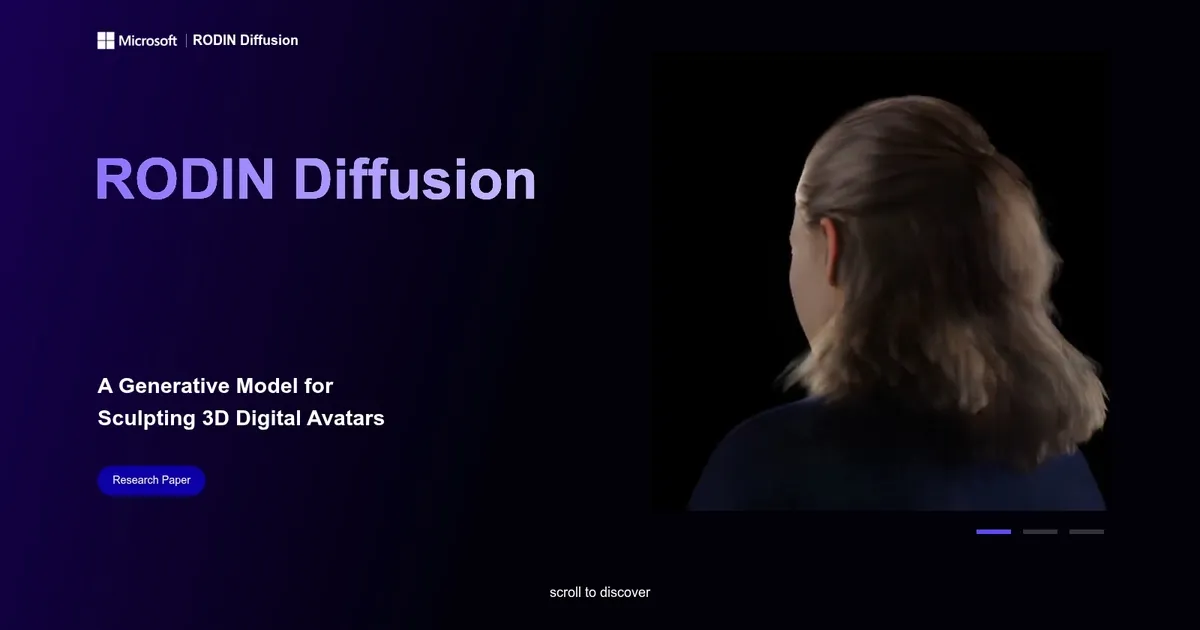
Homepage Screenshot 📸
What are the key features? ✨
- Portrait-Guided Generation: Creates a consistent 3D avatar from a single input photo with accurate identity preservation and multi-view coherence.
- Text-Guided Creation: Produces diverse 3D avatars directly from natural language descriptions covering appearance, clothing, and expressions.
- Text-Based Editing: Allows semantic modifications like changing hairstyle, adding accessories, altering outfits, or adjusting facial expressions via prompts.
- 360-Degree Viewing: Renders high-fidelity avatars with realistic lighting and geometry visible from any angle in interactive demos.
- Hierarchical Diffusion: Uses cascaded multi-scale diffusion on tri-plane NeRF representations for detailed yet efficient 3D synthesis.
Who is it for? 🤔
Examples of what you can use it for 💡
- Game Character Designer: Generates base 3D avatars from concept art portraits then refines looks with text edits for rapid iteration in pre-production.
- Virtual Reality Developer: Creates diverse, realistic avatars for metaverse or social VR experiences using text prompts to match user preferences or roles.
- Film VFX Artist: Builds placeholder digital doubles from actor photos, editing expressions or accessories via text before full rigging.
- Digital Fashion Creator: Produces models in various outfits and hairstyles from descriptions to showcase clothing designs in 3D.
- AI Researcher: Studies or extends diffusion-based 3D generation by examining RODINs architecture and results for new avatar-focused experiments.
Pros & Cons ⚖️
- Impressive avatar detail
- Strong 3D consistency
- Flexible text editing
- Diverse output styles
- Limited public access
- High compute needs
FAQs 💬
Ready to try RODIN Diffusion?
Generates detailed 3D avatars from portraits or text prompts using diffusion models
Visit RODIN DiffusionRODIN Diffusion alternatives 🔗