Frequently Asked Questions
What is the best AI 3D modeling tool?
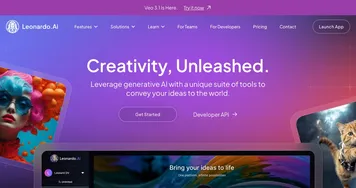
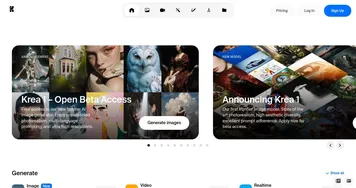
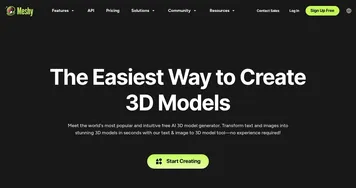
The best AI 3D modeling tool depends on your pipeline. Meshy and Tripo3D are popular for quick game-ready assets with decent topology, while Leonardo.Ai and Krea fit artists who want a broader creative suite. Most have free credits, so it's worth generating the same asset in two before deciding.
What is the difference between 3D modeling and text-to-3D?
3D modeling is the broad category of creating any 3D model with AI, whether you start from a prompt, an image, or a sketch. Text-to-3D is one specific method inside it, where your only input is a written description. Most modeling tools support text-to-3D plus image and sketch inputs too.
Can AI 3D models be used in games?
Yes, AI-generated 3D models can be used in games, but they usually need cleanup first. The raw mesh often has messy topology or a high polygon count, so artists retopologize, bake textures, and rig it before it ships. AI is best for greyboxing scenes and generating background props quickly.
What file formats do AI 3D tools export?
Most AI 3D modeling tools export standard formats like GLB, OBJ, FBX, and STL, which open in Blender, Maya, Unity, and Unreal. GLB and OBJ are common for general use, FBX carries rigging and animation data, and STL is the go-to for 3D printing. Check the export options before you commit.
Are AI 3D modeling tools free?
Most AI 3D modeling tools offer free credits or a limited free tier, then charge a monthly subscription for more generations, higher resolution, and commercial rights. Free plans are fine for testing the quality, but heavy production work pushes you onto a paid plan, usually somewhere in the range of twenty to fifty dollars a month.