AI SDK by Vercel, Inc.
Simplifies building AI-powered apps with TypeScript
Vercel’s AI SDK is a TypeScript toolkit designed to simplify integrating large language models into applications across frameworks like React, Next.js, Vue, Svelte, and Node.js. It provides a unified API to interact with providers like OpenAI, Anthropic, and Google, reducing the complexity of switching between them. The SDK includes three modules: Core for backend tasks, UI for front-end hooks, and RSC for streaming React Server Components.
The Core module supports text generation, structured outputs, and tool calls through functions like generateText and streamText. It standardizes provider APIs, ensuring consistent interactions. The UI module offers hooks like useChat and useCompletion, enabling real-time chatbot and generative UI development. The RSC module streams UI components, minimizing client-side JavaScript for better performance. The SDK supports multi-modal inputs, including text and images, and is open-source, making it cost-free aside from provider fees.
Compared to OpenAI’s SDK, it offers broader framework compatibility. LangChain excels in agent-based workflows but is less focused on UI integration. Recent feedback on X highlights documentation issues, particularly with JSON parsing and advanced features like object streaming. The SDK’s type-safety and streaming capabilities are strengths, but its learning curve can challenge beginners.
The SDK’s provider-agnostic design allows easy model switching, and its GitHub community offers support. However, incomplete documentation and reliance on TypeScript may deter some users. Developers can expect fast, responsive apps, especially with streaming features.
Start with the Core module’s generateText function, test in a small project, and consult the GitHub Discussions for guidance on complex setups.
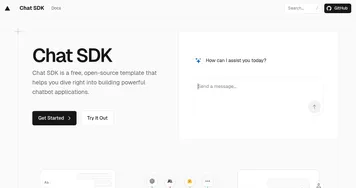
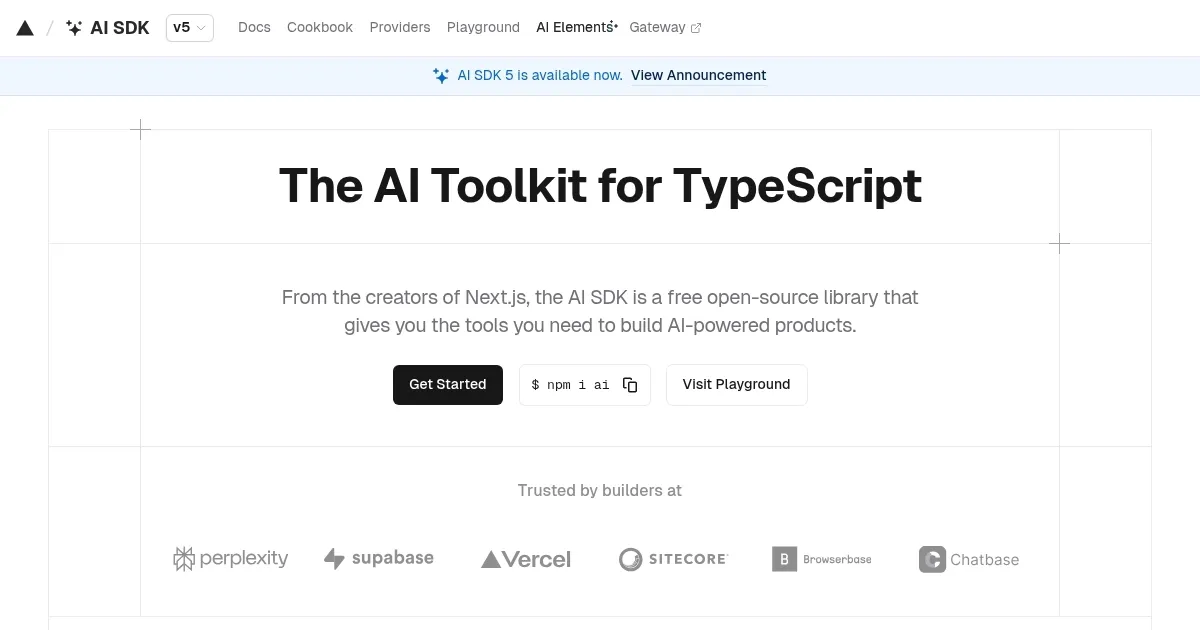
Homepage Screenshot 📸
Video Overview 🎬
What are the key features? ✨
- Unified API: Standardizes interactions with multiple LLM providers for seamless integration.
- Streaming Support: Enables real-time, token-by-token response streaming for responsive apps.
- Type Safety: Leverages TypeScript for reliable, error-catching code development.
- Framework-Agnostic Hooks: Provides UI hooks like useChat for React, Svelte, and Vue.
- Multi-Modal Support: Handles text, images, and other data types in AI interactions.
Who is it for? 🤔
Examples of what you can use it for 💡
- Web Developer: Builds a real-time chatbot in Next.js using the useChat hook for customer support.
- Startup Founder: Creates a generative UI prototype with streaming React components for a pitch.
- Content Creator: Generates dynamic text content with multi-modal inputs for a blog platform.
- Freelancer: Integrates AI features into a Svelte app using provider-agnostic APIs.
- Educator: Develops an interactive learning tool with real-time AI responses in Vue.
Pros & Cons ⚖️
- Unified API for multiple providers
- Real-time streaming capabilities
- Type-safe TypeScript integration
- Framework-agnostic UI hooks
- Spotty documentation
- JSON parsing issues
FAQs 💬