BuildShip
A low-code backend builder that lets users ship APIs, scheduled jobs, and backend cloud functions
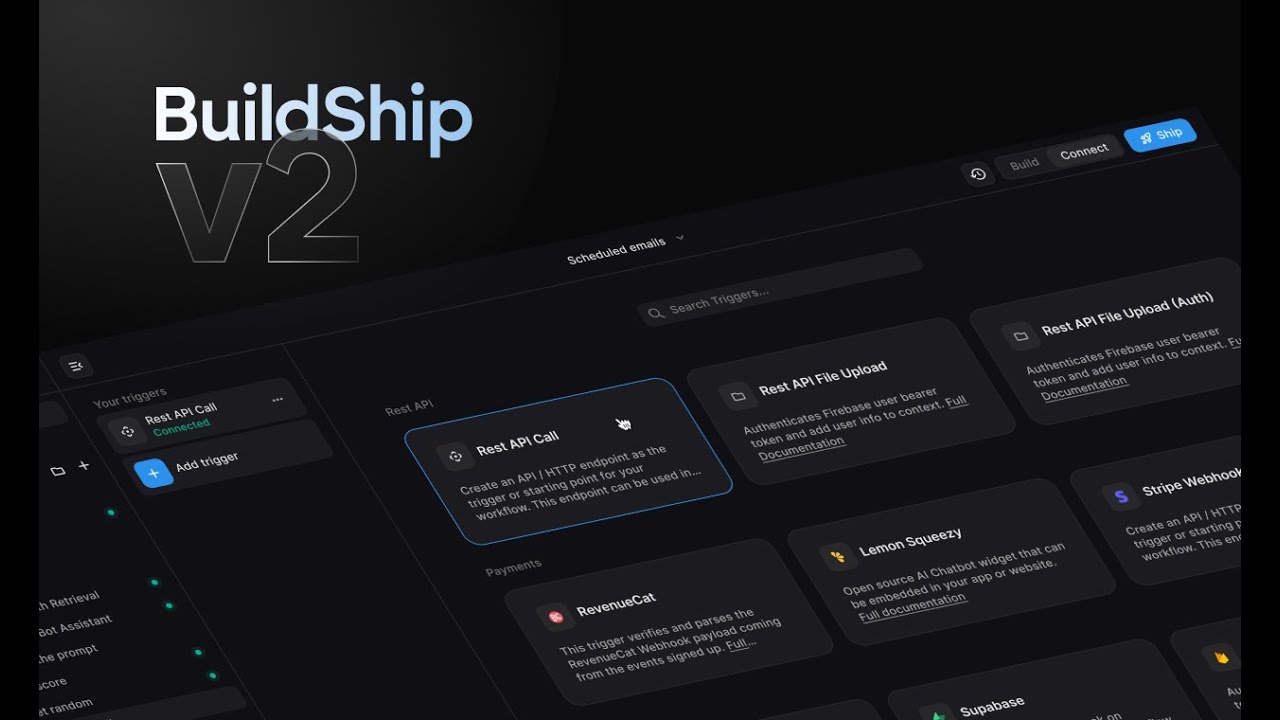
BuildShip is a low-code visual backend builder that instantly lets users ship APIs, scheduled jobs, and backend cloud functions. Powered by AI, it enables users to create backend components without extensive coding.
The platform offers a variety of pre-built nodes and the option to create custom nodes, facilitating quick integrations and development. Users can also combine multiple AI models — including LLMs and image generation — to enhance the usefulness of their applications. Moreover, BuildShip provides a range of templates to address complex use cases, allowing developers to expedite their projects.
With features like version control, an advanced code editor, and support for JavaScript/Typescript – the platform caters to both novice and experienced developers. Overall, BuildShip presents a powerful solution for backend development, leveraging AI capabilities for a more efficient workflow.
Also worth noting is BuildShip’s drag-and-drop interface, which simplifies the development process. This allows seasoned developers and those with minimal coding experience to contribute effectively. Plus, pre-built templates allow users to kick-start their projects, saving time and resources.
BuildShip supports a variety of API integrations, making it easier to connect with third-party services. This flexibility can be essential for businesses that rely on multiple tools to manage their operations. So, whether you need to integrate payment gateways, analytics tools, or social media platforms — BuildShip simplifies the process, allowing for a more cohesive tech stack. Check it out.
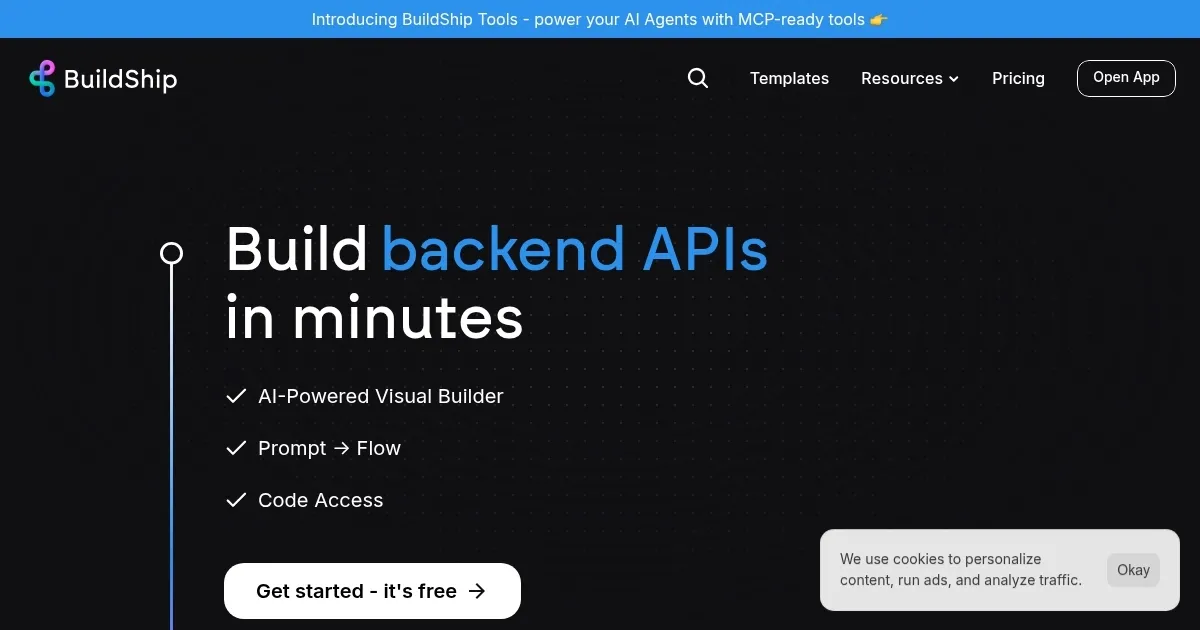
Homepage Screenshot 📸
Video Overview 🎬
What are the key features? ✨
- Drag-and-drop interface: BuildShip offers an easy-to-use visual interface that allows users to design backend workflows by simply dragging and dropping components.
- AI-powered node generation: The platform utilizes artificial intelligence to generate custom nodes. Users can describe their desired functionality in plain English, and BuildShip's AI will create the corresponding workflow logic.
- Template library: BuildShip provides a comprehensive range of templates to address complex use cases, allowing developers to expedite their projects.
- API integrations: The platform supports a variety of API integrations, making it easier to connect with third-party services.
- Real-time collaboration: BuildShip enhances team communication through real-time collaboration features, allowing team members to work together on the same project simultaneously.
Who is it for? 🤔
Examples of what you can use it for 💡
- Developers can quickly create and deploy APIs without extensive coding
- Set up scheduled jobs, automating routine backend tasks such as data backups or report generation
- Design workflows that incorporate machine learning capabilities, such as natural language processing or image recognition
- Create bespoke backend functions tailored to their application's specific needs
- Integrate apps with third-party services like payment gateways, analytics platforms, or social media APIs
Pros & Cons ⚖️
- The intuitive drag-and-drop design simplifies backend development
- The platform's AI-powered features assist in node generation and workflow creation
- Extensive template library allows users to jumpstart their projects
- Despite its user-friendly design, new users may require time to fully utilize all features
Ready to try BuildShip?
A low-code backend builder that lets users ship APIs, scheduled jobs, and backend cloud functions
Visit BuildShip