Galileo
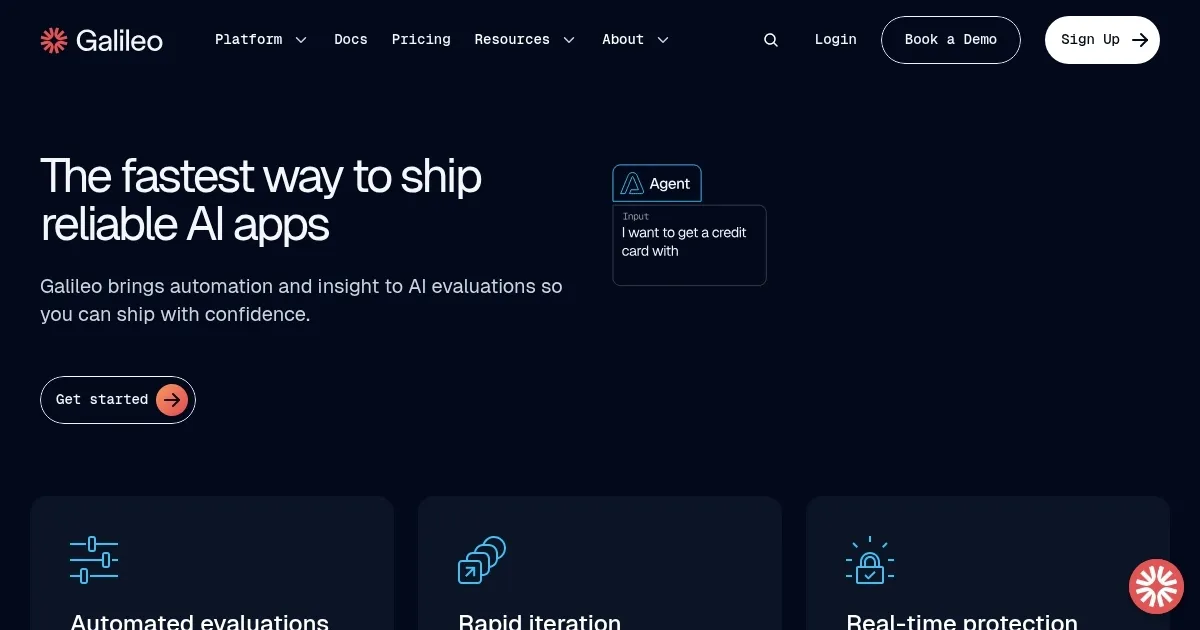
Evaluates and monitors AI applications to ensure reliability and accuracy
Galileo is an evaluation and observability platform designed to ensure the reliability and accuracy of generative AI applications, such as chatbots, retrieval-augmented generation (RAG) systems, and multi-agent workflows. It provides automated metrics, real-time monitoring, and guardrails to help developers test, debug, and secure AI systems. The platform targets enterprises building complex AI solutions, offering tools to address challenges like hallucinations, prompt injections, and data privacy risks. Galileo’s core strength lies in its Evaluation Intelligence Platform, which integrates into AI development workflows to deliver actionable insights.
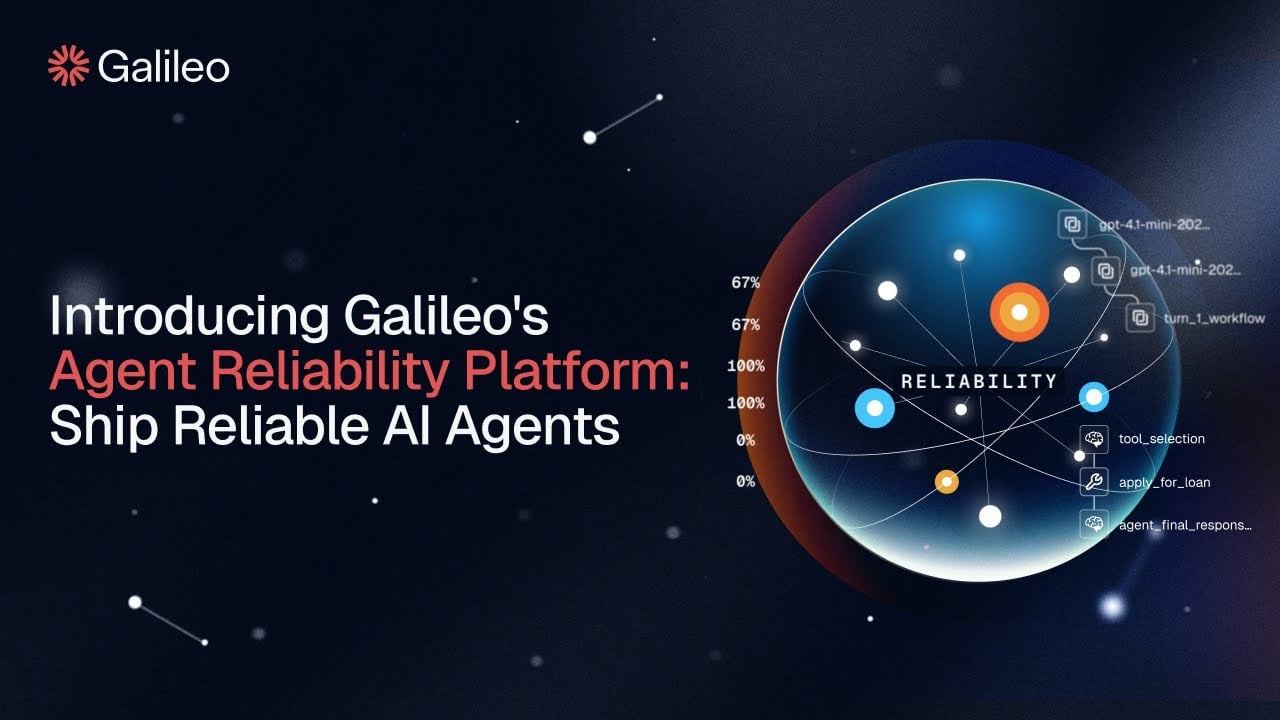
The platform’s Luna-2 models power its evaluation engine, offering low-latency (sub-200ms) metrics like Context Adherence, Tool Selection Quality, and Conversation Quality. These prebuilt metrics allow teams to assess AI performance without needing extensive ground truth data. Custom metrics can be created via a metrics IDE or LLM-as-judge approach, tailoring evaluations to specific use cases. The Insights Engine provides actionable suggestions, such as adjusting prompts to fix tool errors, while the graph view visualizes agent decision paths for efficient debugging. Galileo Protect adds real-time guardrails to block harmful outputs, like PII leaks or toxic responses, in production environments.
Galileo integrates with tools like MongoDB and supports open standards like OpenTelemetry, ensuring compatibility with existing tech stacks. Its free tier offers 5,000 traces per month, suitable for small-scale testing, while enterprise plans provide advanced features like scalable inference and dedicated support. Compared to competitors like Weights & Biases and Arize AI, Galileo excels in real-time guardrailing and low-latency evaluations but may be less accessible for smaller teams due to its enterprise focus.
The platform’s learning curve can be a challenge for those new to AI evaluation, requiring familiarity with concepts like flow adherence or chunk utilization. Smaller teams may find the feature set overwhelming, and pricing details for enterprise plans are only available through custom quotes, which lacks transparency. Galileo’s focus on scalability makes it ideal for large organizations, such as HP or Twilio, but less suited for hobbyists or early-stage startups.
To use Galileo effectively, begin with the free tier to explore prebuilt metrics on a small project. Test custom metrics for specific use cases and leverage the graph view for debugging complex workflows. For production systems, implement Galileo Protect to ensure safety and compliance.
Homepage Screenshot 📸
Video Overview 🎬
What are the key features? ✨
- Luna-2 Models: Evaluate AI outputs with low-latency, high-accuracy metrics.
- Insights Engine: Suggests fixes for AI errors, like prompt tweaks.
- Graph View: Visualizes agent decision paths for efficient debugging.
- Galileo Protect: Blocks harmful outputs in real time.
- Custom Metrics: Allows tailored evaluations via a metrics IDE.
Who is it for? 🤔
Examples of what you can use it for 💡
- Enterprise AI Teams: Use Galileo to monitor and debug multi-agent workflows.
- Data Scientists: Evaluate RAG systems with metrics like Context Adherence.
- Developers: Test chatbot performance with prebuilt and custom metrics.
- Security Teams: Deploy Galileo Protect to block PII leaks in production.
- Product Managers: Compare model performance to optimize AI applications.
Pros & Cons ⚖️
- Fast, accurate Luna-2 models
- Real-time guardrails for safety
- Visual debugging with graph view
- Enterprise-focused features
- Overkill for small projects
FAQs 💬
Ready to try Galileo?
Evaluates and monitors AI applications to ensure reliability and accuracy
Visit Galileo