Best AI Plagiarism Checking Tools

39 toolsRanked by traffic

AI plagiarism checkers compare a piece of writing against billions of web pages, publications, and student papers to find passages that match an existing source. Unlike AI detectors, they look for copied or unattributed text rather than guessing whether a machine wrote it. Tools like Grammarly, DupliChecker, Turnitin, and Copyleaks return a similarity report highlighting which lines overlap with which sources.

Students, editors, and content teams use these to confirm originality and catch missing citations before publishing or submitting. The practical thing to know is that a high similarity score is not always plagiarism: quoted material, common phrases, and your own reference list all match other documents. A good checker shows you where the overlap is so you can decide whether it needs a citation or a rewrite.

Grammarly
Grammarly - icon
Grammarly
Enhances writing with grammar, tone, and style suggestions.
QuillBot
QuillBot - icon
QuillBot
Enhances writing with AI-powered paraphrasing, grammar checking, and tone analysis.
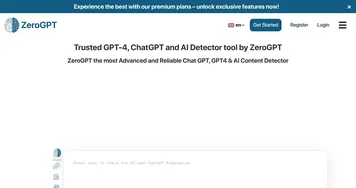
ZeroGPT
ZeroGPT - icon
ZeroGPT
An AI detector that can spot whether text was written by a human or generated by AI
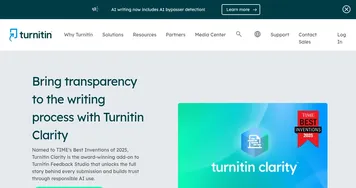
Turnitin
Turnitin - icon
Turnitin
An educational platform that uses advanced AI to ensure academic integrity by detecting plagiarism
GPTZero
GPTZero - icon
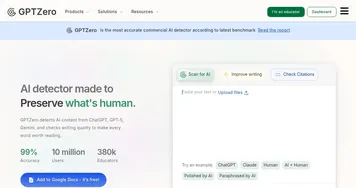
GPTZero
An AI detection tool used by over a million users worldwide to identify content created by AI models
Undetectable.ai
Undetectable.ai - icon
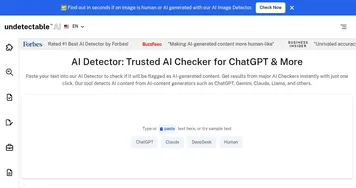
Undetectable.ai
Turn your flagged AI content into high-quality writing that bypasses AI detectors
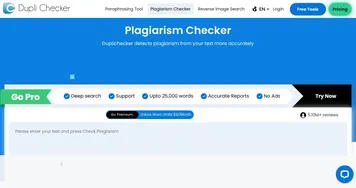
DupliChecker
DupliChecker - icon
DupliChecker
An online tool that helps users identify and handle plagiarism in their text
Copyleaks
Copyleaks - icon
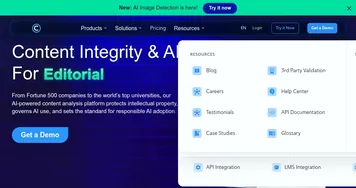
Copyleaks
A tool for detecting plagiarized or AI-generated content
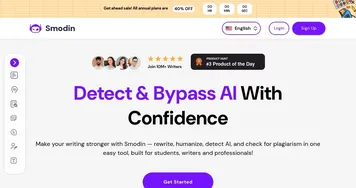
Smodin
Smodin - icon
Smodin
An AI-powered suite of writing content creation tools
Originality.ai
Originality.ai - icon
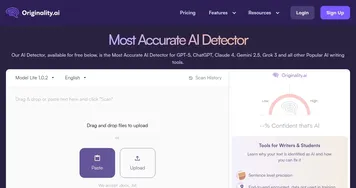
Originality.ai
A plagiarism and AI generated content detection tool
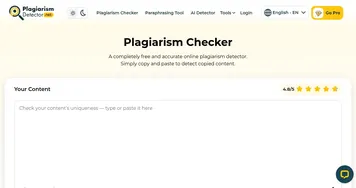
PlagiarismDetector.net
PlagiarismDetector.net - icon
PlagiarismDetector.net
An AI-powered tool for detecting plagiarism in different types of documents
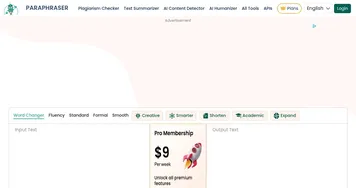
Paraphraser
Paraphraser - icon
Paraphraser
Rephrases text using AI to maintain meaning with new wording
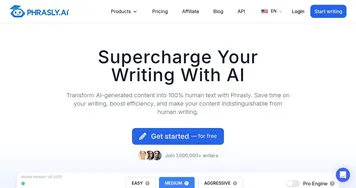
Phrasly
Phrasly - icon
Phrasly
An AI tool designed to transform AI-generated text into one that can bypass AI detectors
BypassGPT
BypassGPT - icon
BypassGPT
Transform AI-generated text into content that looks like it was written by human
Aithor
Aithor - icon
Aithor
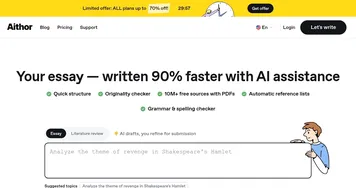
An AI-powered writing tool designed to assist users in content creation across different domains

Frequently Asked Questions

How do AI plagiarism checkers work?
Plagiarism checkers break your text into chunks and compare them against a large index of web pages, journals, and stored papers. When chunks match an existing source, the tool highlights them and reports a similarity percentage. It shows where the overlap occurs and what it matched, leaving you to judge whether each match needs a citation.
What counts as a good plagiarism score?
There is no universal cutoff, but lower is better and context matters. A few percent from quotes, common phrases, and your reference list is normal and harmless. Many institutions grow concerned above roughly fifteen to twenty percent, though the real question is whether matched passages are properly quoted and cited, not the number alone.
What is the difference between a plagiarism checker and an AI detector?
A plagiarism checker finds text copied from existing sources, while an AI detector guesses whether a machine wrote the text. One compares against real documents and points to a match; the other analyzes writing patterns and estimates a probability. Original writing can still trip an AI detector, and AI-written text can pass a plagiarism check.
Are free plagiarism checkers reliable?
Free checkers catch obvious copying but usually search a smaller index and cap how much text you can scan at once. Paid services like Turnitin and Copyleaks compare against larger databases, including academic archives a free tool cannot reach. For casual checks the free options help; for high-stakes work a fuller database matters.
Does paraphrasing avoid plagiarism?
Not on its own. Reworded text can slip past a checker, but using someone else's ideas or structure without credit is still plagiarism even when the words change. Proper attribution, not clever rephrasing, is what makes borrowed material legitimate. Cite the source whenever the underlying idea is not your own.