Skip to content
logo-darklogo-darklogo-darklogo-dark
  • Tool Categories
    • 🎨Art & Creative Design505
    • 🏢Business Management644
    • 💻Coding & Development514
    • 👮Detection83
    • 🧠General Use728
    • 🏥Health & Wellness55
    • 📷Image & Photo Analysis100
    • 🖼️Image Generation & Editing618
    • 📐Interior & Architectural Design37
    • 🎓Learning & Education483
    • ⚖️Legal & Finance90
    • 🎭Lifestyle & Entertainment236
    • 📢Marketing & Advertising627
    • 🎧Music & Audio138
    • 👔Office & Workplace1,014
    • 🔬Research & Data Analysis373
    • 👥Social Media245
    • 🎥Video Generation & Editing426
    • 👧🏻Virtual Companion135
    • 🎤Voice Generation & Editing381
    • ✍️Writing & Editing808
    • All Categories
    • AI Use Cases
  • News
  • Events
    • Academic Conferences
    • Developer Conferences
    • Expos / Trade Shows
    • Industry Summits
    • Workshops / Training
    • All Events
    • Past Events
  • Saved Tools
  • Suggest a Tool
    ✕
    Home › Coding & Development › Development› LlamaIndex
    LlamaIndex

    LlamaIndex

    A simple, flexible data framework for connecting custom data sources to large language models

    LlamaIndex is a comprehensive data framework designed to transform enterprise data into production-ready applications powered by Large Language Models (LLM). It acts as a bridge by seamlessly connecting various forms of data, including unstructured, semi-structured, and structured data sources like APIs, PDFs, documents, and SQL databases, to the capabilities of LLMs.

    The platform provides a robust suite of features for loading, indexing, querying, and evaluating data across 160+ data formats and integrations with over 40 vector stores, document stores, graph stores, and SQL database providers. This enables businesses to easily orchestrate production LLM workflows — from simple prompt chains to advanced reasoning and agent interactions — making it an essential tool for enterprises looking to leverage the power of LLMs for diverse applications.

    Alongside its enterprise offerings, LlamaIndex fosters a vibrant open-source community, LlamaHub, enriched by developers’ contributions, including innovative tools, unique connectors, and vast datasets. This community-supported ecosystem not only adds value to the platform by expanding its capabilities but also serves as a hub for developers to engage, share insights, and collaborate on future LLM applications.

    Developers can easily integrate with a plethora of services, including various vector stores and large language models, thanks to the extensive range of integration options provided.

    As of March 2024, LlamaIndex’s community metrics count 2.8M+ monthly downloads, 15k+ community members, 700+ active contributors, and over 5k applications developed — which is nothing short of impressive.

    Visit LlamaIndex ↗
    Categories
    💻 Coding
    👨‍💻 Development 🤖 Code Assistant
    🧠 General
    🧠 Large Language Model 🦙 Open Source Model
    👔 Work
    🔗 Agent
    🎓 Education
    📖 Knowledge Base 🗂️ Knowledge Management
    🔬 Research
    📊 Data Analytics

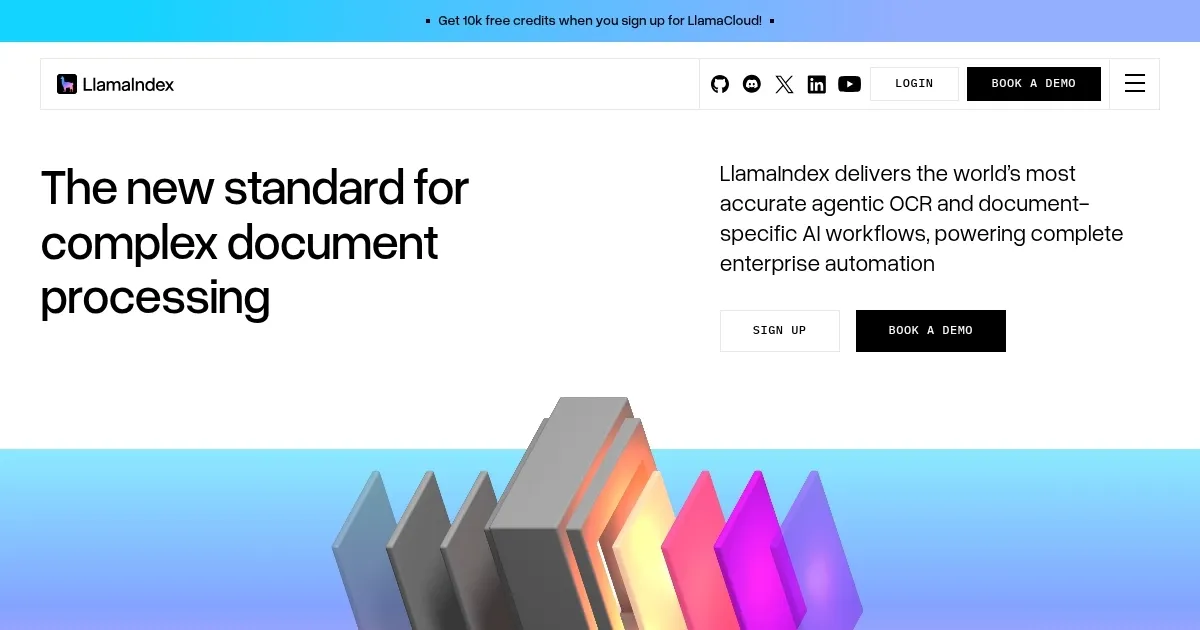
    Homepage Screenshot 📸

    LlamaIndex screenshot

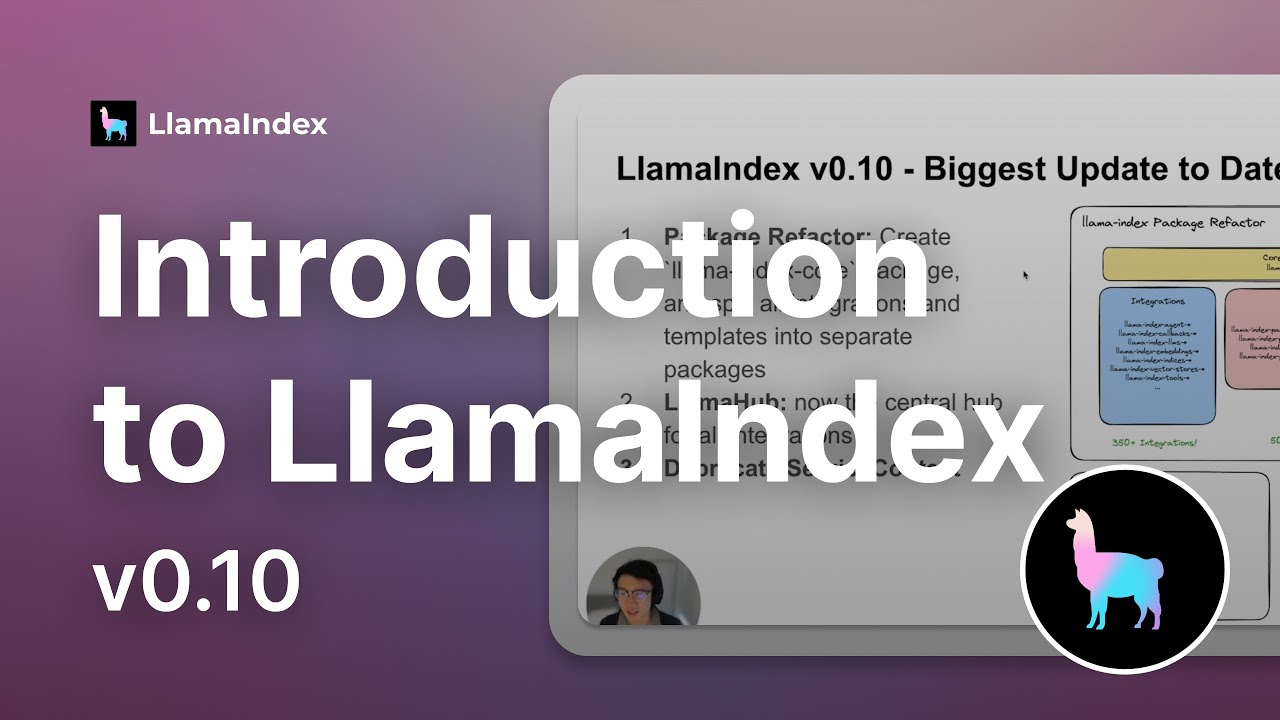
    Video Overview 🎬

    LlamaIndex - Video Overview

    What are the key features? ✨

    • Extensive data integration: Supports over 160 data sources, handling unstructured, semi-structured, and structured data like APIs, PDFs, and SQL databases.
    • Comprehensive indexing: Offers integration with over 40 vector stores, document stores, graph stores, and SQL databases to store and index data for various use cases.
    • Query orchestration: Facilitates production LLM workflows, from simple prompt chains to advanced Retrieval-Augmented Generation (RAG) and agent-based operations.
    • Performance evaluation: Includes tools to measure the quality of data retrieval and LLM responses, integrating with observability partners for thorough performance tracking.
    • Community included: Features a robust community with hundreds of contributed connectors, tools, and datasets.

    Who is it for? 🤔

    LlamaIndex is aimed at enterprises, researchers, developers, and academics who must manage and query large volumes of diverse data. It benefits those building LLM applications and requires extensive data integration and advanced querying capabilities. The platform takes a community-driven approach, supporting open-source contributions and fostering innovation in data management and retrieval.

    Examples of what you can use it for 💡

    • Helps enterprises manage and query large volumes of diverse data sources for enhanced decision-making
    • Assists researchers in organizing and retrieving relevant information from extensive databases
    • Enables developers to build and deploy large language model (LLM) applications with efficient data integration and querying capabilities
    • Supports the creation of advanced BI tools by facilitating the retrieval and analysis of structured and unstructured data
    • Provides academics with tools to manage and query data across various formats

    Pros & Cons ⚖️

    • Querying large volumes of diverse data sources without special hardware
    • Makes the job easier for researchers going through big sets of data
    • Build and deploy LLM apps with efficient data integration
    • This is a tool for pros only

    FAQs 💬

    What is LlamaIndex mainly used for?
    LlamaIndex helps developers build LLM applications that connect large language models to private or domain-specific data, with a strong focus on Retrieval-Augmented Generation (RAG), document parsing, intelligent agents, and multi-step workflows.
    Is LlamaIndex only for Retrieval-Augmented Generation (RAG)?
    While RAG remains a core strength, LlamaIndex also supports building autonomous agents, event-driven workflows, multi-modal applications, chat engines, and document automation tools beyond simple question-answering.
    What kinds of data can LlamaIndex handle?
    It supports over 90 unstructured file types through LlamaParse, including PDFs with complex layouts, tables, images, spreadsheets, handwritten notes, and more, plus connectors for APIs, databases, and other sources.
    How does LlamaIndex differ from LangChain?
    LlamaIndex focuses primarily on data indexing, ingestion, and high-accuracy retrieval (especially for documents), while LangChain offers broader modular orchestration for complex chains, tools, and multi-step reasoning; many teams combine both for best results.
    Do I need coding experience to use LlamaIndex effectively?
    Basic Python knowledge helps a lot since it's a developer-first framework, though managed services like LlamaCloud and pre-built templates make it more accessible for getting started quickly.
    Can LlamaIndex work with local or open-source LLMs?
    Yes, it integrates with a wide range of models including local ones via Ollama or other providers, giving you flexibility beyond just commercial APIs like OpenAI.
    What makes LlamaParse special compared to other PDF parsers?
    It uses vision-language models to achieve industry-leading accuracy on tricky elements like nested tables, multi-column layouts, embedded charts, and even skewed or handwritten content.
    Is LlamaIndex suitable for enterprise use?
    Absolutely, many teams use it in production for finance, insurance, healthcare, and manufacturing, thanks to features like scalable indexing, confidence scoring, citations, and managed cloud services.
    How does LlamaIndex handle complex multi-step tasks?
    Through its Workflows engine, which is event-driven and async-first, allowing orchestration of agents, loops, parallel paths, reflection, and stateful processes with pause/resume capabilities.
    Can beginners get started quickly with LlamaIndex?
    Yes, the quickstart usually takes just a few lines of code to load documents, build an index, and start querying, though advanced features like custom agents reward deeper exploration.

    Ready to try LlamaIndex?

    A simple, flexible data framework for connecting custom data sources to large language models

    Visit LlamaIndex ↗
    LlamaIndex alternatives 🔗

    1. LangChain LangChain Simplifies building AI apps with large language models
    2. Haystack Haystack Orchestrates customizable, production-ready LLM applications
    3. Weaviate Weaviate The AI native, open-source vector database for storing data objects and vector embeddings
    4. MindsDB MindsDB An AI tool that radically simplifies the process of applying machine learning to your end-user applications
    5. FlowiseAI FlowiseAI Open source UI visual tool to build your customized LLM flow using Langchain
    6. LangSmith LangSmith An online tool that helps developers get their Large Language Model app from prototype to production
    Share
    LlamaIndex screenshot enlarged
    Best AI Tools

    Discover the best AI tools for any use case

    Explore
    • Tool Categories
    • AI Use Cases
    • AI Events
    • AI News
    • Saved Tools
    Company
    • About Us
    • Contact Us
    • Media & Partnerships
    • Suggest a Tool
    Legal
    • Privacy Policy
    • Terms of Service
    Copyright © 2026 Best AI Tools 415 Mission Street, 37th Floor, San Francisco, CA 94105