Superagent
Secures AI agents by blocking prompt injections, malicious tool calls, and data leaks in runtime
Superagent is an open-source runtime protection tool for AI agents and copilots. It inspects prompts, validates tool calls, and blocks threats in real time. The tool functions as a secure proxy between applications, models, and tools. SuperagentLM, its core safety model, analyzes traffic with sub-50ms latency to detect and mitigate risks.
Key threats addressed include prompt injections, which rewrite system prompts to hijack agent behavior. Data leaks involve secrets or sensitive information escaping through outputs or tool responses. Backdoors embed vulnerabilities in codebases or workflows via poisoned outputs. Superagent blocks these at runtime, ensuring safe execution.
Integration occurs at multiple points. For inference providers, it filters requests and responses at the API layer. In agent frameworks, it adds checks for unsafe inputs and tool calls. CI/CD pipelines receive scans to block unsafe code before deployment. Deployment options include hosted managed service for quick scaling and self-hosted for on-premise control.
Competitors like Lakera offer broader GenAI security with red teaming, while Superagent specializes in agentic threats under an MIT license. It provides free core functionality, with enterprise features in self-hosted setups. Users report effective blocking of real attacks, supported by community contributions on GitHub.
Practical implementation starts with installing the SDK via npm. Configure policies in “superagent.yaml” for models like GPT-5 or Claude Sonnet 4.5. Test with simulated threats from documentation, then integrate into production workflows for ongoing protection.
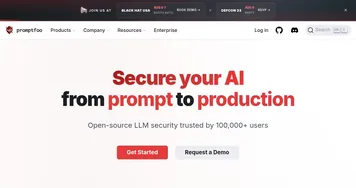
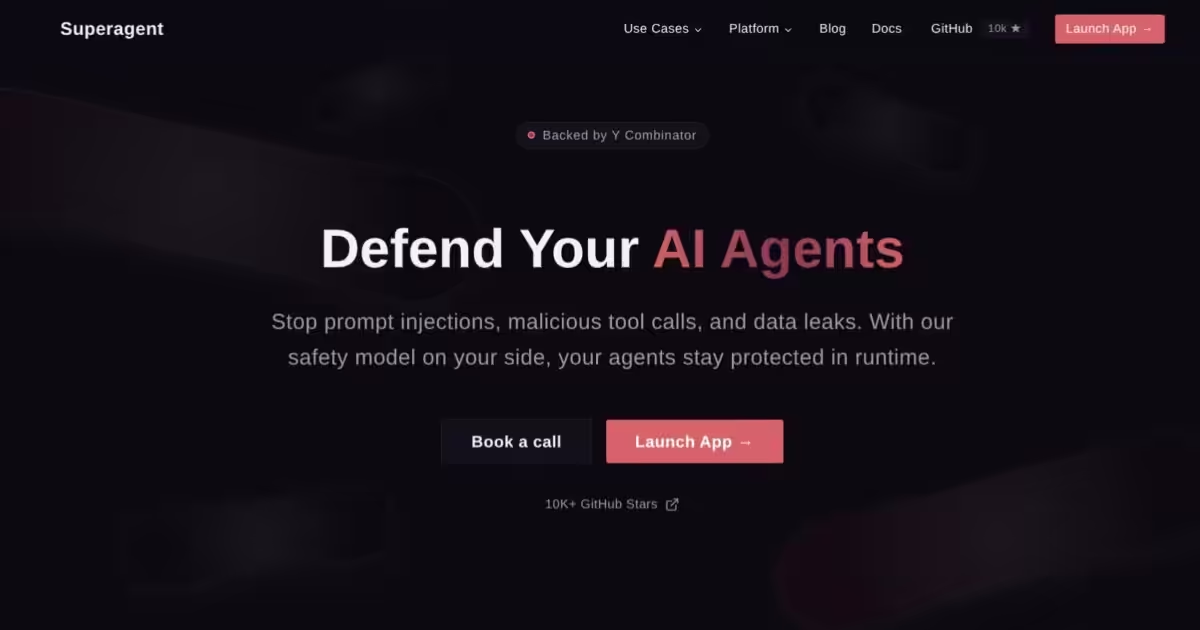
Homepage Screenshot 📸
What are the key features? ✨
- SuperagentLM: Analyzes requests and responses in under 50ms to detect threats like injections and leaks.
- Guarded Tooling: Validates tool calls and parameters before execution to prevent malicious actions.
- Runtime Redaction: Automatically redacts sensitive data in outputs to maintain compliance.
- Policy Enforcement: Applies customizable rules to block unsafe inputs across API layers and pipelines.
- Telemetry Logging: Streams audit logs and metrics for transparency and security reviews.
Who is it for? 🤔
Examples of what you can use it for 💡
- AI Developer: Integrates Superagent into agent frameworks to validate tool calls and block prompt injections during testing.
- DevOps Engineer: Scans CI/CD pipelines for backdoors in generated code before deployment to production.
- Compliance Officer: Uses runtime redaction to prevent data leaks and maintain audit logs for regulatory reviews.
- Product Manager: Deploys hosted Superagent to secure customer-facing AI copilots without slowing feature releases.
- Security Analyst: Monitors telemetry from self-hosted instances to investigate and mitigate emerging agent threats.
Pros & Cons ⚖️
- Low-latency protection
- Open-source and free
- Easy integrations
- Strong community
- Policy setup curve
- Limited broad GenAI
FAQs 💬
Ready to try Superagent?
Secures AI agents by blocking prompt injections, malicious tool calls, and data leaks in runtime
Visit Superagent