Best AI Prediction Tools

52 toolsRanked by traffic

AI prediction tools forecast what is likely to happen next by learning patterns from historical data and projecting them forward. They estimate future outcomes like sales, customer churn, stock movement, and demand trends. The category includes financial forecasters like AInvest, product-analytics predictors like Mixpanel Spark AI and Abacus.AI, and forecasting features built into platforms like Tableau AI.

Finance teams, product managers, and marketers use these tools to plan ahead instead of reacting after the fact, whether that means flagging at-risk customers or projecting next quarter's revenue. It is worth being clear-eyed about one thing: a forecast is a probability, not a promise. Models extrapolate from the past, so they handle steady trends well and miss sudden shocks they have never seen. The most useful tools show their confidence and assumptions, so treat predictions as informed guidance for decisions, not as certainty.

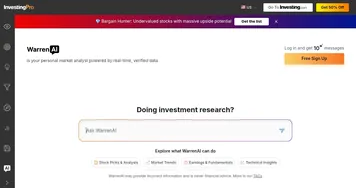
WarrenAI
WarrenAI - icon
WarrenAI
An AI tool for people who want to understand the stock market better
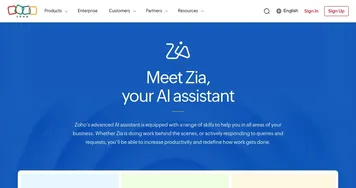
Zia
Zia - icon
Zia
AI-powered business assistant from Zoho
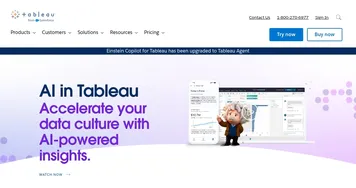
Tableau AI
Tableau AI - icon
Tableau AI
An AI tool made to streamline and accelerate the data analysis process across the entire Tableau platform
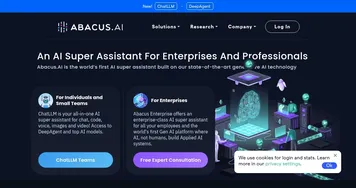
Abacus.AI
Abacus.AI - icon
Abacus.AI
Comprehensive platform designed to meet the diverse AI needs of enterprises
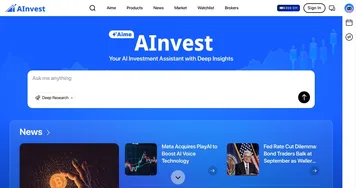
AInvest
AInvest - icon
AInvest
An AI-powered platform that helps investors make smart choices in the stock market
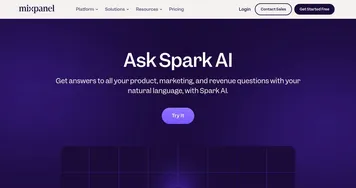
Mixpanel Spark AI
Mixpanel Spark AI - icon
Mixpanel Spark AI
Get answers to all of your product, marketing, and revenue questions to spark your next big idea
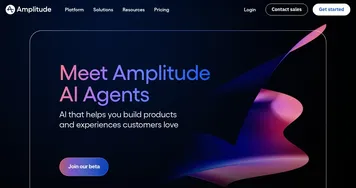
Amplitude AI
Amplitude AI - icon
Amplitude AI
A suite of AI-powered features that help users navigate every aspect of building digital products
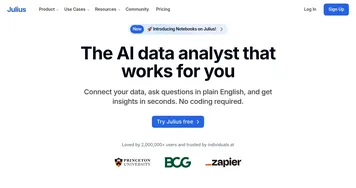
Julius
Julius - icon
Julius
An advanced AI tool designed to simplify data analysis and visualization
Clari
Clari - icon
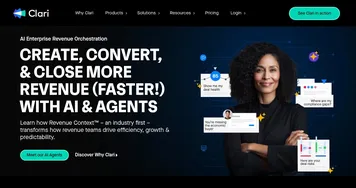
Clari
An AI-powered revenue platform that enhances and predictability of revenue operations
Nansen
Nansen - icon
Nansen
Tracks on-chain data to provide actionable crypto investment insights
LuxAlgo
LuxAlgo - icon
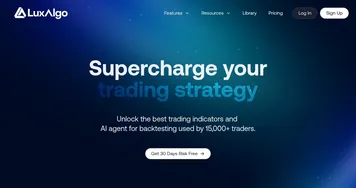
LuxAlgo
Enhances trading with AI-driven indicators and backtesting for smarter strategies
Jungle
Jungle - icon
Jungle
Generates flashcards and quizzes from study materials to boost student learning efficiency.
GeoSpy
GeoSpy - icon
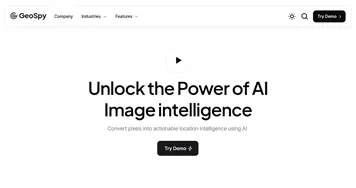
GeoSpy
An advanced AI tool designed for location intelligence and geospatial analysis
PPSPY
PPSPY - icon
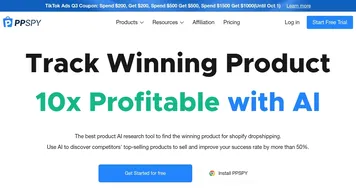
PPSPY
A product AI research tool to find the winning product for dropshipping
Vtiger Calculus GPT
Vtiger Calculus GPT - icon
Vtiger Calculus GPT
Enhances CRM with AI insights, recommendations, and automation for sales, marketing, and support

Frequently Asked Questions

What is the best AI prediction tool?
The best AI prediction tool depends on what you are forecasting. AInvest focuses on financial and market predictions, Mixpanel Spark AI and Abacus.AI are built for product and business metrics like churn and conversion, and Tableau AI adds forecasting to visual analytics. Pick the one trained for your domain, since a finance model and a churn model behave very differently.
How accurate are AI predictions?
AI predictions are accurate enough to guide decisions but should never be treated as certainty. They work best for stable patterns with plenty of clean history, and they struggle with rare events or sudden market shifts that resemble nothing in the training data. Always read a forecast as a probability with a margin of error, not a guaranteed result.
How do AI prediction tools forecast the future?
AI prediction tools forecast by learning patterns and relationships in your historical data, then projecting those patterns forward to estimate likely outcomes. They weigh signals such as past trends, seasonality, and correlated factors to produce a number with a confidence range. The more relevant, clean history you feed them, the more reliable the forecast tends to be.
Can AI predict stock prices or the market?
AI tools can model market trends and estimate probabilities, but no tool reliably predicts exact stock prices, because markets react to unpredictable news and human behavior. Tools like AInvest help you spot patterns and weigh scenarios rather than guarantee returns. Use them as one input alongside your own judgment, and never bet more than you can lose.
What's the difference between predictive analytics and regular analytics?
Regular analytics describes what already happened, reporting on past and present numbers. Predictive analytics uses that history to estimate what will happen next, forecasting future outcomes like demand or churn. One explains the data you have, the other projects forward from it, which is why predictions always carry uncertainty that historical reports do not.