Best AI Reading Tools

23 toolsRanked by traffic

AI reading tools support you while you read, reading text aloud, explaining hard passages, translating as you go, and answering questions about what's on the page. The category includes read-aloud apps like Speechify and NaturalReader, comprehension helpers like Britannica Chatbot, and highlighters like LINER that explain and save what you mark.

Students, language learners, and people with dyslexia or busy commutes use these to get through text more easily, whether that means listening instead of looking or having a tricky paragraph explained in simpler words. The honest limit is that AI explanations can oversimplify or slip, so for study material, treat them as a helping hand rather than the final word. When you're choosing one, decide whether you mainly want natural-sounding read-aloud or in-line help understanding what the text actually means.
Britannica Chatbot
Britannica Chatbot - icon
Britannica Chatbot
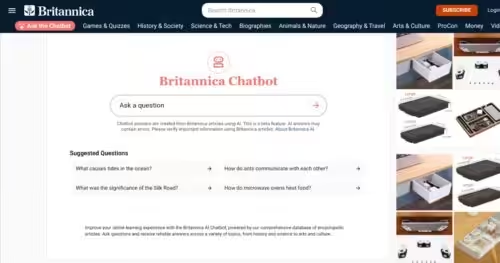
A digital librarian drawing from over 130,000 meticulously fact-checked articles
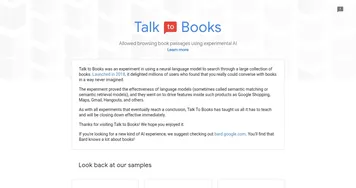
Talk to Books
Talk to Books - icon
Talk to Books
Google's experiment which allows users to interact with books in an entirely new way
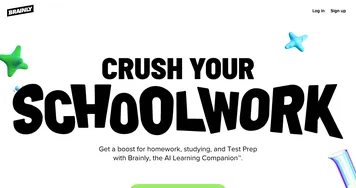
Brainly
Brainly - icon
Brainly
Provides instant homework help and AI-powered tutoring for students
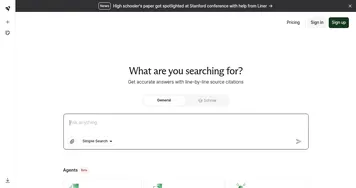
LINER
LINER - icon
LINER
A web-based tool that combines searching and collecting information in a user-friendly interface
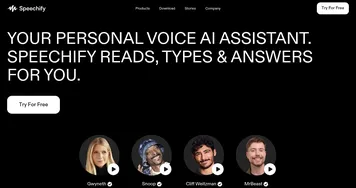
Speechify
Speechify - icon
Speechify
Transforms text into natural-sounding speech for effortless listening
NaturalReader
NaturalReader - icon
NaturalReader
Transforms text into natural AI voices for accessibility and content creation
Immersive Translate
Immersive Translate - icon
Immersive Translate
A browser extension designed to break down language barriers by offering bilingual translations
Goodnotes
Goodnotes - icon
Goodnotes
Captures, organizes, and enhances handwritten and typed notes across devices
SoBrief
SoBrief - icon
SoBrief
An AI-powered platform offering concise summaries of over 70,000 books across different genres
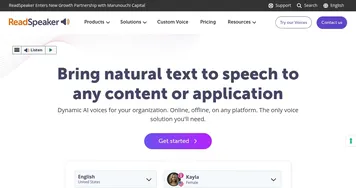
ReadSpeaker
ReadSpeaker - icon
ReadSpeaker
Converts text into lifelike spoken audio using AI voices across many languages
Migaku
Migaku - icon
Migaku
Transforms media into language-learning tools with flashcards and translations
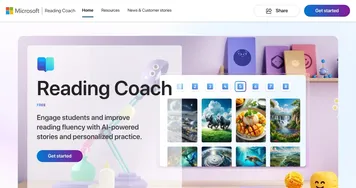
Reading Coach
Reading Coach - icon
Reading Coach
A free AI-powered tool that helps learners improve their reading skills
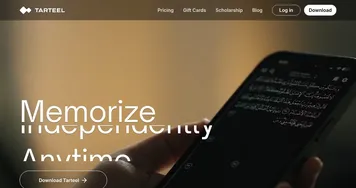
Tarteel
Tarteel - icon
Tarteel
AI-powered Quran companion that interacts with users as they recite
Lexi AI
Lexi AI - icon
Lexi AI
Generates and optimizes Meta ad campaigns using AI for better targeting and performance
twee
twee - icon
twee
A set of AI-powered tools for English teachers

Why would you use AI tools for reading?

These tools can be incredibly useful for many purposes, such as:
  • Summarizing books

    No time to read a big book? No problem, just ask an AI tool such as Wordtune Read and Scholarcy to create a summary for you, highlighting the key points, characters, and plot twists. The summarization tool can also come in handy for students and professionals who need to quickly understand the content of a book.
  • Analyzing text

    AI tools for reading can actually understand different elements of the text and can be used to identify themes, writing styles, and other literary elements. This is particularly useful to some students, academics, and (aspiring) writers looking to improve their own writing style.
  • Study guide creation

    The same tools that can summarize a 500-page book into 10 pages could be used to generate study guides. Again, you can expect to get key concepts, characters, and plot points of a book from AI.
  • Creating presentations

    Once a summary has been created, you can ask your AI tool for reading to take another step forward and help you prepare the presentation of the written work. Needless to say, students love this.
  • Better understanding

    For more complicated works, AI tools could be used to help readers enhance his/her comprehension. You can get a summary written in a way that a 10-year-old can understand if you want to, helping you better remember the content.
  • Generating content

    Generating summaries from big books could be a part of your overall content-generation strategy, as you can use this content in your articles, blog and social media posts. Or however you like it, for that matter. We have the entire section with AI tools for writing you may want to check out.
All in all, AI tools for reading have been created for a reason, and they tend to also include some of the general AI capabilities. For instance, ChatGPT is often used to summarize longer text, though we have to add that some of these reading AI tools can even get the job better as their models have been trained on specific literature. And that is something the targeted market of those services appreciates.

Frequently Asked Questions

What do AI reading tools do?
AI reading tools help you read and understand text. Depending on the tool, that means reading pages aloud in a natural voice, explaining a difficult passage in simpler words, translating as you read, or answering questions about the content. The goal is to make reading easier, whether you struggle with the words, the meaning, or just the time.
Can AI read text aloud naturally?
Yes. Read-aloud tools like Speechify and NaturalReader use AI voices that sound close to a human narrator, with adjustable speed and a choice of voices. They can read articles, PDFs, documents, and web pages, which helps people who learn better by listening or who want to get through reading while doing something else.
Can AI explain a passage I don't understand?
Yes. Comprehension-focused reading tools let you select a sentence or paragraph and ask for a plainer explanation, a definition, or background context. This is useful for dense academic writing or an unfamiliar topic. Keep in mind that the explanation can simplify or occasionally err, so verify anything you plan to rely on for study.
Are AI reading tools good for dyslexia?
Many people with dyslexia find them helpful, especially read-aloud features that let you listen along while following the text, plus adjustable fonts, spacing, and pacing. Hearing and seeing words together can ease decoding and improve comprehension. Tools vary, so it is worth trying a couple to find the voice, speed, and layout that work for you.