Frequently Asked Questions
What is AI knowledge management?
AI knowledge management is software that organizes your own documents, notes, and files and lets you ask questions against them. Rather than searching the public internet, it searches your internal content: a wiki, a drive, chat history, or a project workspace. The goal is to surface what your team already knows without digging through folders.
What's the difference between knowledge management and a knowledge graph?
Knowledge management is about finding and retrieving your existing documents, answering "where is the file that explains this?" A knowledge graph is about mapping how ideas connect, showing the relationships between concepts as a network. One helps you locate known content; the other helps you see structure and links you might have missed.
How does AI knowledge management keep company data private?
Reputable tools honor your existing access permissions, so the assistant only surfaces files a given person is already allowed to see. Many offer enterprise plans with data isolation and no training on your content. Still, review the privacy terms and permission settings before connecting sensitive systems, because a poor configuration can expose more than intended.
Can AI knowledge management search across all my apps?
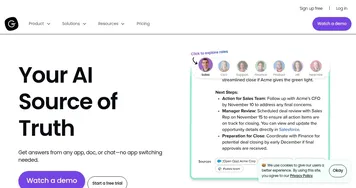
Some can. Tools built for company-wide search, like Glean, connect to many systems at once, so a single query reaches your drive, wiki, ticketing, and chat. Others focus on one workspace, like notes or stored files. Check the integration list before committing, since coverage of the apps you actually use is what decides whether it helps.
Do AI knowledge management tools work with messy documents?
They help, but they cannot fix bad source material. If your docs are outdated, duplicated, or contradictory, the tool will faithfully surface that mess in its answers. Most teams get the best results by cleaning up and tagging their key documents first, then letting the tool handle retrieval across the tidied set.